
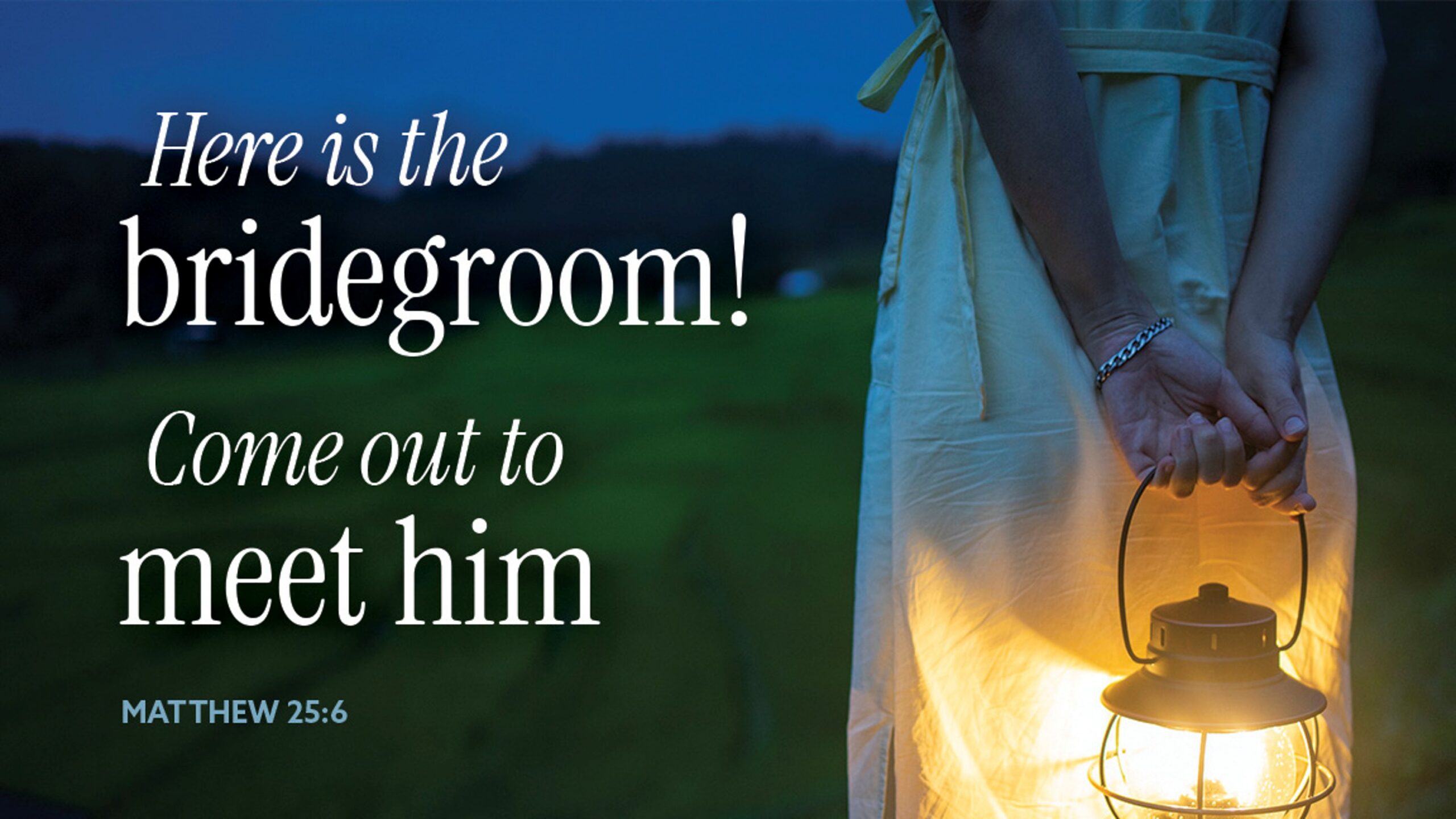
Sermon for the Twenty-Fourth Sunday after Pentecost
Matthew 25:1-13
Dear friends, grace to you and peace from God our Father and our Lord Jesus Christ.
My niece’s wedding was yesterday. My sister, the mother of the bride, had been planning it for months. It was a labor of love for her. Every detail was thoughtfully prepared. And it wasn’t just her – many of us made thoughtful preparations so we’d be ready for the big day. There were gifts to thoughtfully prepare. There were special clothes to pick out. As the officiant, I put a lot of preparation into the sermon for the wedding. My niece’s bridal party had preparations to make and responsibilities to tend to. There were speeches to prepare, dresses and suits to have ready, flowers to pin on.
There were so many preparations to be made, but they were not made begrudgingly. They were part of the fun of it. They contributed to the sense of anticipation. These were preparations made with joy in anticipation of the joy we would share.
All of these preparations culminated in a beautiful celebration. There were family and friends and food and toasts and dancing. It was indeed an occasion of great joy. And not only that, it was also an occasion of great hope. I’m at the age now where instead of going to the weddings of my peers, I’m going to the weddings of people a generation or two younger than me. I’m going to the weddings of kids I’ve watched grow up, kids I love with all my heart: my nephew, my son, my confirmation students, now my niece. This makes it even more meaningful to me. To see these kids embrace holy matrimony, to see them promising themselves to another for the rest of their lives, just fills me with both great joy and with great hope for the future.
This is what weddings are all about. While wedding customs may have changed over the centuries, the joy and hope they conjure has been a constant going all the way back to ancient times. We need to keep this front and center as we consider the parable we hear today. Jesus chose the image of a wedding celebration to describe the circumstances of his return to usher in his eternal kingdom. Like a wedding, it will be a celebration. It will be an occasion of great joy and great hope.
There are preparations to be made for this wedding – and this is where things in the parable might get confusing to us. While the core of what a wedding is has remained constant throughout history, wedding traditions come and go, and in the ancient world those traditions were very different.
In Jesus’ time, bridesmaids had a specific responsibility for the wedding. They were to wait with the bride at her home until the groom came for her to escort her to the wedding. This happened at night, after dark. Once the groom arrived, it was the bridesmaid’s responsibility to light the lamps they had prepared and lead the procession to the wedding. They would dance in celebration on the way to the wedding feast, their lamps bobbing and weaving with their elegant moves, making brilliant streaks along the dark parade route. It was quite a spectacle! Once they arrived at the place the groom had prepared, there would be feasting for days and the bride and groom would be joined together as one.
Jesus uses the imagery of this wedding custom in ancient Israel to describe the kingdom of God, the relationship between God and his people. He wasn’t the first to use wedding imagery to describe this relationship. The Old Testament is filled with this imagery. Hosea describes God as a faithful husband. The prophet Isaiah wrote: “As a young man marries a young woman, so will your Maker marry you; as a bridegroom rejoices over his bride, so will your God rejoice over you.”The Song of Songs has long been interpreted in part as an allegory of the relationship between God and his people.
Jesus wasn’t the first to use this imagery, and he wasn’t the last either. St. Paul refers to the relationship of Christ and his church as akin to that of husband and wife, their one flesh relationship mysteriously reflecting the closeness of Christ and his bride. In the book of Revelation, St. John does the same, describing Christ’s return as the marriage supper of the Lamb and describing the new kingdom, the new Jerusalem, as being like a bride adorned for her husband.
The point of all this is to describe the coming reign of God as an occasion of great joy and great hope. It is something to prepare for with joyful anticipation, for God and his people will be joined together as one in an enduring covenant of love.
But Jesus has another point to make in his parable. He describes five of the ten bridesmaids as foolish. Why are they foolish? Well, they didn’t have any oil for their lamps. They had one job! They were to be ready to light the way! But they weren’t prepared. They had been invited to the celebration, to be sure, but they didn’t take that invitation seriously. They didn’t have the joyful anticipation that the other five did, joyful anticipation which drove their preparation. They had no oil for their lamps, and thus no light to shine when the groom arrived.
They tried to siphon off some oil from the wise bridesmaids, but this wasn’t something they could share. If they did, the whole procession could go dark halfway to the wedding hall. They tried to rush into town to try to find some oil there, but it was too late. The groom came while they were away. When they finally made it to the wedding party, the door was already shut. “Lord, lord, open to us!” they pleaded. But the groom replied, “Truly I tell you, I do not know you.”
Jesus has a clear message for us in telling this parable. The message is this: Don’t be a foolish bridesmaid! “Keep awake, therefore,” Jesus says, “for you know neither the day nor the hour.” Jesus is calling us to be like the wise bridesmaids. He is calling us to be prepared for the wedding celebration by having enough oil.
The oil here represents faith. To be prepared for the wedding celebration, then, is to tend to our faith. It is to keep the flask of faith topped off. We can’t expect to siphon off someone else’s faith, riding their coattails into the kingdom. We can’t expect to be able to replenish our oil out there in the marketplace of the world in the dark of night. Faith is a gift, it is a work of the Holy Spirit, but we are each individually responsible for what we do with that gift, preserving it rather than letting it evaporate, keeping it close rather than neglecting it, having it ready rather than leaving it behind.
This oil is topped off throughout our lives by the hearing of God’s Word. It is topped off by receiving the Lord’s Supper. It is topped off by being connected to the body of Christ in worship and fellowship and service. This oil of faith is sustained and strengthened by diligently making use of the means of grace given in Word and Sacrament. This is what it means to prepare for the wedding celebration! This is what it means to keep awake. This is what it means to be ready.
These are not preparations to engage in begrudgingly. These preparations are not a chore. While Jesus does suggest the possibility of a tragic outcome for those without oil, these are not preparations to engage in out of fear. We are not spiritual “preppers,” stockpiling supplies out of fear, preparing for the worst.
There is an exhortation here. There is a warning. Keep awake. Keep your oil full. Keep the faith. We need to hear this warning from Jesus. We need to hear this warning because it is too easy for us to get complacent. It is too easy for us to get distracted and find ourselves unprepared. It is too easy for us to get discouraged about the future and let our oil evaporate.
But don’t let this stark warning prevent you from seeing the bigger picture of what our Lord has in store for us. Jesus says the kingdom of heaven will be like this… and then he goes on to describe a wedding celebration! He describes what is universally understood throughout human history to be an occasion of great joy and great hope. He describes his coming to usher in his kingdom as being like a groom who has come for his bride, to claim her as his own, to love her and cherish her and to hold her close forever.
We are invited to prepare for this grand occasion by keeping our oil topped off. These preparations are not a burden. They are part of the fun! They are part of the anticipation. We prepare for this procession by being ready to celebrate it with a faith that lights the way, whether Jesus comes tomorrow or whether he takes his sweet time.
But we are not just in the wedding party. We are also the bride. The church is the bride of Christ, and Jesus is coming to make us his own forever. And so we always have reason to look to the future with hope.
In the meantime, he comes to us even now to give us a foretaste of the wedding feast to come, and in so doing he keeps our lamps full.
Thanks be to God. Amen.
Rev. Jeffrey R. Spencer
Oak Harbor Lutheran Church