
Sermon for the Eighteenth Sunday after Pentecost
Sermon for the Eighteenth Sunday after Pentecost – September 27, 2026
Matthew 21:23-32
Dear friends, grace to you and peace from God our Father and our Lord Jesus Christ.
How would you like it if a stranger just waltzed through the front door of your house and then started rearranging the furniture like they owned the place, making themselves at home?
This is what happened right before our gospel reading for today. Jesus had just entered Jerusalem. He came through the city gate and then he waltzed right into the temple like he owned the place and immediately started rearranging the furniture. He drove out the moneychangers, flipping over their tables. Then Jesus made himself at home and started to teach.
This got the attention of the chief priests and the elders. This was their house! What did he think he was doing? Who did he think he was?
This is what prompted the questions which begin our gospel reading for today. “By what authority are you doing these things?” the chief priests and the elders asked Jesus, “and who gave you this authority?” The “these things” included Jesus’ overturning tables, rearranging the furniture. It included Jesus’ making himself at home and teaching in “their” space.
These same chief priests and elders had already had a similar run-in with John the Baptist. When John was baptizing out at the river Jordan, they confronted him with similar questions: “Who are you? What are you doing?” And when John answered them, telling them he was preparing the way for Messiah, the Son of God, they didn’t believe him. Maybe they didn’t want to believe him. Maybe they had too much to lose in believing him.
The chief priests and the elders were threatened by both John and Jesus. Both threatened their sense of control. They were used to being in charge and now here were these two who seemed to be acting out of an authority that was above them. Jesus barged into their temple and literally started rearranging the furniture, for crying out loud!
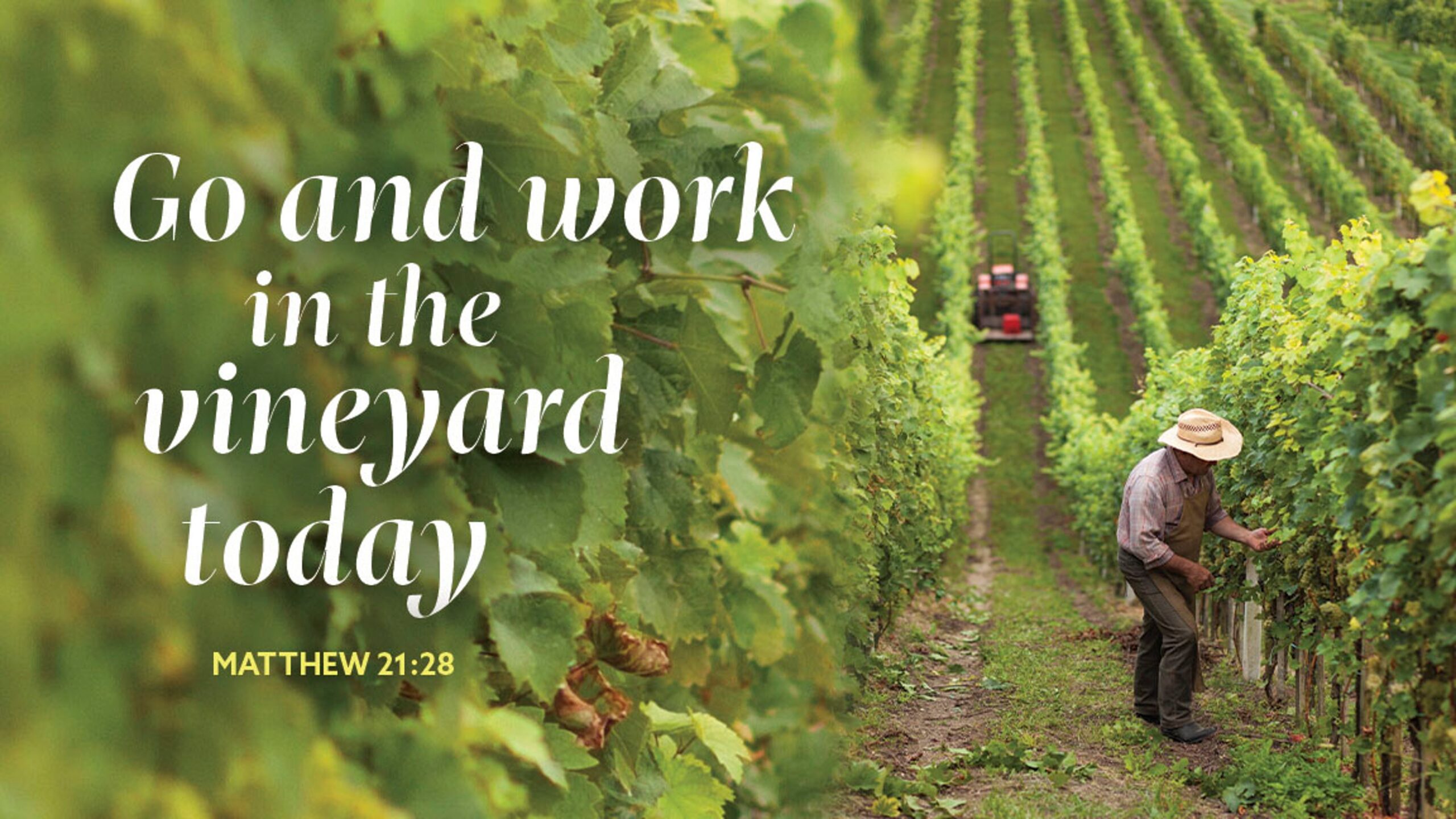
Jesus described what was going on with a little parable. “A man had two sons,” Jesus began. “He went to the first and said, ‘Son, go and work in the vineyard today.’ The son answered, ‘I will not,’ but later he changed his mind and went. The man said the same to the second son, who said, ‘I go, sir;’ but he did not go.”
It is helpful to note that when Jesus uses the phrase “changed his mind” in the parable,” he uses the same root word for the word “repent.” The first son repented! He changed his mind and began to obey his father.
We also need to understand the imagery of the vineyard. When Jesus talks about going to work in the vineyard in this parable, he isn’t just drawing on a common agricultural occupation. It was that, but there’s something more going on here. Throughout the Old Testament the vineyard is used as a symbol of God’s faithful covenant people.
And so, when the first son changes his mind and goes to work, he is returning to the vineyard of the covenant. He is returning to right relationship with God. He is going to work by participating in God’s work in the world. He is showing up for a life of faith and its fruits.
Jesus uses this little parable to describe what had been going on in Jerusalem.
The chief priests and the elders had given an initial “yes” to working in the vineyard. They had been faithful to the Father at one point, but now they were refusing to show up for work. They were not responding to what God was up to in John and in Jesus. They saw them both as threats to their authority, their autonomy, and they just wouldn’t change their mind about it. And so, they initially said yes to the Father, but now they didn’t want anything to do with the vineyard, with God’s work.
At the same time, all kinds of wayward sons had been lining up to receive John’s baptism of repentance. They had initially said “no” to God with the way they lived their lives. They said no to God’s will and God’s ways. They had abandoned the covenant. But now, as a result of the preaching of John and the presence of Jesus, they had changed their minds! Now they were entering the vineyard, becoming part of God’s faithful covenant people. And with their changed minds came changed lives! Tax collectors gave up their corrupt ledgers and their unclean money. Prostitutes stopped selling what God intended to be sacred. They were repenting. They were letting Jesus rearrange the furniture in their lives.
Jesus’ little parable was an indictment of the chief priests and the elders for their rejection of John and Jesus. It was an indictment of the lip service they paid to God which was followed by a failure to show up for work now that the kingdom of God was at hand. It was an indictment of their refusal to change their minds, a refusal to repent and believe.
And so Jesus concluded the parable by telling them that the tax collectors and prostitutes were going into the kingdom of God ahead of them. “For John came in the way of righteousness and you did not believe him, but the tax collectors and prostitutes believed him,” Jesus told them. “And even after you saw it, you did not change your minds and believe.”
We have come here today because we know we need to repent. John the Baptist is smiling down from heaven because our service began with repentance and the forgiveness of sin. We are here today because we believe in Jesus. We believe he is the savior we need, and we are here to be refreshed in his gifts of grace and praise him for all he has done for our salvation. We are God’s covenant people. This is the vineyard, and we have shown up in it!
While this is all true, I can’t help but think that there is often still a part of us that says yes to all of this but only has one foot in the vineyard. I can’t help but think that there are chief priests and elders taking up residence in parts of our hearts. Like them, we say the right things, we know the words of the liturgy, we know the answers in Bible class, but we don’t really want Jesus exerting his authority over us, not entirely. We say, “I go, sir!” and then we go on to live as we please, trying to preserve a measure of autonomy and control, not changing, not letting Jesus rearrange the furniture of our lives.
This parable tells us that the confession of faith is not something we do only with our lips. It is something we do with our lives. It means going to work in the vineyard. It means participating in God’s work. It means letting the kingdom of God enter every inch of our hearts. It means letting God’s authority reign in every area of our lives. To confess only with our lips and not with our lives is to turn our yes into a no.
Have you been saying a yes, but living a no? Have you been keeping one foot out of the vineyard? Have you been insisting on being in charge, maintaining your own autonomy, clinging to control? Have you struggled to put away a sinful habit or attitude? Have you been telling Jesus to keep his hands off of those tables, that you like them right where they are?
If any of that is true, then your response to the Father is really a no.
But there is such good news for us in this parable today, because it tells us that our no doesn’t need to be the last word. This parable tells us that even if our answer has been no, there is still hope. That no can still be turned into a yes. The vineyard is still open to us.
It sounds strange to say it, but the tax collectors and the prostitutes are our role models here. They are not our role models because of the wicked things they did. They are our role models because they changed their minds. They are our role models because they repented. They are our role models because they received John’s preaching and Jesus’ presence with joy, believing that God was at work through them to bring forgiveness, life, and salvation. They are our role models because they rejoiced to go to work in the vineyard as God’s redeemed people.
Let us join them there with both feet. Let us join them there with our whole heart. Let us let Jesus make himself at home in us, knowing that when he does, he’s going to rearrange some furniture.
Rev. Jeffrey R. Spencer
Oak Harbor Lutheran Church